The rants and raves of a technogeek
Raichu Asterisk Anyone? – PIKA WARP REVISITED
When I last reviewed the PIKA WARP Asterisk appliance, I named the post “Pokemon Asterisk” – today I’ve decided to review the PIKA WARP Asterisk appliance again, only this time, with the newly released Asterisk GUI 2.0 release – our cuddly Pikachu is now a Raichu (relax, it took me about 30 minutes to find out what a Picachu evolves into).
The new PIKA appliance now boasts the new star fangled Digium Asterisk GUI 2.0, which takes the old Asterisk GUI (which was OK, but still had some miles to go) and more or less throws it into the waste bin. The new GUI is far more useful, far more usable and most importantly – makes life way easier for the integrator. While the previous version of the PIKA Warp appliance was targeted for developers, the new version of the WARP is aimed directly into the heart of the integration scene.
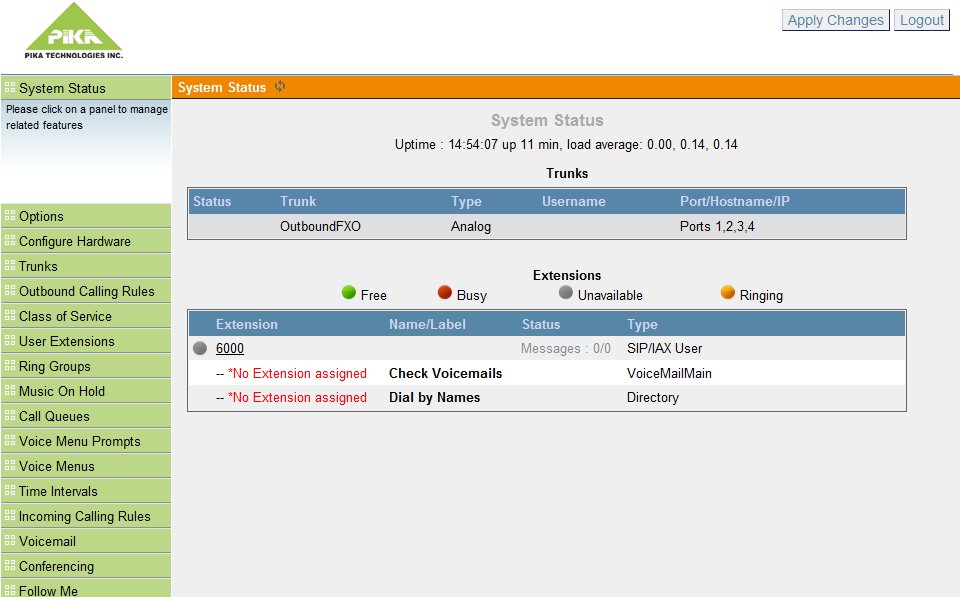
Now, I have to admit that after upgrading the system to the new PIKA WARP cuImage I had some issues logging into the system. So, what I did is more or less hack myself in via ‘single user mode’. Here’s a small guide on how to do that. Before we being, you will require a serial cable connection to the WARP appliance in order to do this, which means, this is more or less a hardcore procedure.
When the system boots up, and you are confronted with a message saying “Hit any key to stop autoboot:” simply hit any key on your keyboard, and you’ll be fronted with the “=>” prompt, indicating that the boot loader is now waiting for information. Now, we need to tell the PIKA WARP appliance to boot into single user mode.
To do so, we need to modify the ‘ramargs’ environment variable of UBOOT, to indicate that we want to start single user mode. Enter the following command:
setenv ramargs setenv bootargs root=/dev/ram rw ramdisk_size=130000 single
This will indicate to the UBOOT loader to initiate a single user mode bootup. Once in single user mode, you can use the ‘passwd’ command to change the root password of the PIKA WARP appliance. This procedure can be used by an other PIKA WARP based appliance.
Once of the nice additions in the new Asterisk GUI 2.0 is the support for Class of Service, which doesn’t really exist in FreePBX. In many offices, managers like to restrict various extensions from accessing different parts of the telephony system – that is performed utilizing the Class of Service screen.
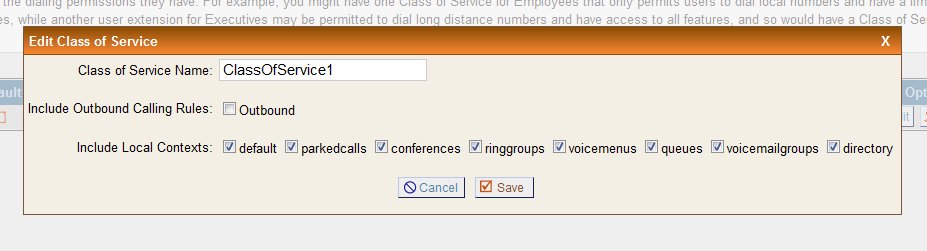
The “Class of Service” management enables you to create groups with access to specific trunks or PBX functions, thus, enabling you to seperate users and groups of users from specific PBX resources. For example, some users can be completely restricted from using outbound trunks, while others can be restricted to using a single FXO interface out of 4 connected FXO interfaces. In general, this is one of the best features in the GUI yet in my opinion.
I’m currently reviewing the new version, so once I have new information I’ll post my findings.
| Print article | This entry was posted by admin on January 25, 2009 at 10:42 pm, and is filed under Asterisk, GPL, embedded, open source, technnology. Follow any responses to this post through RSS 2.0. You can leave a response or trackback from your own site. |
No comments yet.
You must be logged in to post a comment.
Can you trust your integrator with Fraud Analysis?
about 1 year ago - No comments
As some of you know, over the past 9 months, I’ve been heavily involved in the establishment of Humbug. For those who may not know, Humbug is a Call Analytics and Fraud Analysis SAAS. Now, differing from many of the current telephony SAAS projects, we are not based on Amazon EC2 or some other public cloud infrastructure, we build our own cloud environment. Why do we build our own cloud? simple, we need to keep your data secured and confidential. At Humbug, we see ourselves as a cross between Google Analytics – in our ability to analyze and handle data and Verisign – in our security and confidentiality requirements and methodologies.
Business 2.0 – Taking the leap forward…
about 1 year ago - No comments
The following post doesn’t really fit in line with the normal spirit of the blog, simply because it’s not funny nor directly related to technology. It’s called Business 2.0, as it relates to the ever problematic question any business owner has: “When should I grow and how?”.
Asterisk, Greed and Revenue Shares
about 1 year ago - 1 comment
Revenue sharing is one of the oldest methods of earning profits, actually, I believe it may just be right up there with trading of goods and food.
Open Source, Philanthropy and Asterisk
about 1 year ago - 3 comments
When I started using Open Source software, it seemed like all Open Source projects are driven by philanthropic agendas. We were all focused on “sticking it to the man” – showing all these would be software vendors that community driven projects can do just as well – if not better.
Call Analytics – Closed Alpha testing group
about 1 year ago - No comments
Well, it’s been almost a month since I’ve started writing about the humbug project. Now, it’s time to actually get you people involved, at least in the initial levels. We are looking to add 10 additional members into the humbug call analytics suite. Currently available analytics during the alpha testing is inbound call analytics.
Call Analytics – Beyond CDR analysis – Part I
about 1 year ago - 1 comment
“Oh, just get me the CDR’s and I’ll take it from there” – how many times have I heard these words before? I can’t even imagine the number of times in the past 15 years of IT/Telecom’s work that I’ve done and in the last 8 years of Asterisk in particular – when it comes to billing and fraud management, it would appear that the CDR’s are the Rosetta Stone of the industry.
Beyond the dialtone – PBX user experience revisited
about 1 year ago - No comments
When most of us think about PBX systems, we usually associate these with cumbersome usage, confusing dialing codes and in most cases – a PBX system is automatically associated with the annoying task of transferring a call from one handset to another. Lately, I’ve been thinking deeply about how people use PBX systems, is this really the only way to use a PBX system? is there something else to the mix? can we really enrich one of the oldest operational paradigms in the world? – and for that matter, can the public be re-educated to assimilate a new breed of PBX systems or services?
Digium TE205P vs. OpenVox D210P
about 2 years ago - No comments
If there is one thing I like doing is testing hardware, specifically, testing new hardware that is related to Asterisk. I was more than pleased when OpenVox had approached me, asking to review one of their products – specifically after I once announced that I really dislike cheap clone cards. So, I got OpenVox’s D210P card, which is a fairly similar clone to the TE205/TE210 of Digium, and I decided to take a it for a test drive.
I’m not rude, I’m eccentric
about 2 years ago - No comments
Today I got the chance to speak at a Polycom half-day convention, mainly to speak about Asterisk and HDvoice. Now, putting aside the part about HDvoice (I’m getting a post about that on its own), I gotten to the point where I believe that I’m currently perceived as being an eccentric.
Astricon 2009 – Glendale, AZ – Part II
about 2 years ago - No comments
Ok, it’s day 1 (or actually day 2) for AstriCon 2009 – and here’s my report for the day.


Picasa
Twitter
Facebook
LinkedIn
Youtube
RSS